Farmer Producer Registration in Punjab
Punjab's economy depends on agriculture as its primary industry because farmers in this region dedicate themselves to safeguarding food supplies which feed the entire nation.
Punjab’s economy strongly depends on agriculture.
Farmers play a major role in India’s food supply.
Small and marginal farmers face financial difficulties.
Limited market access affects farmer income.
Intermediaries reduce farmers’ bargaining power.
High input costs create pressure on farming operations.
Get Free Consultation
What is a Farmer Producer Company?
A Farmer Producer Company (FPC) operates as a registered business under the Companies Act, 2013, enabling farmers to unite their resources for better financial results.
The organization functions as a Private Limited Company that serves agricultural producers and their associated business operations.
Simple Idea Behind an FPC
Farmers form FPCs to establish organizations which their shareholder members own together.
Farmers who work together earn more together.
Farmers create a business structure to sell their products collectively.
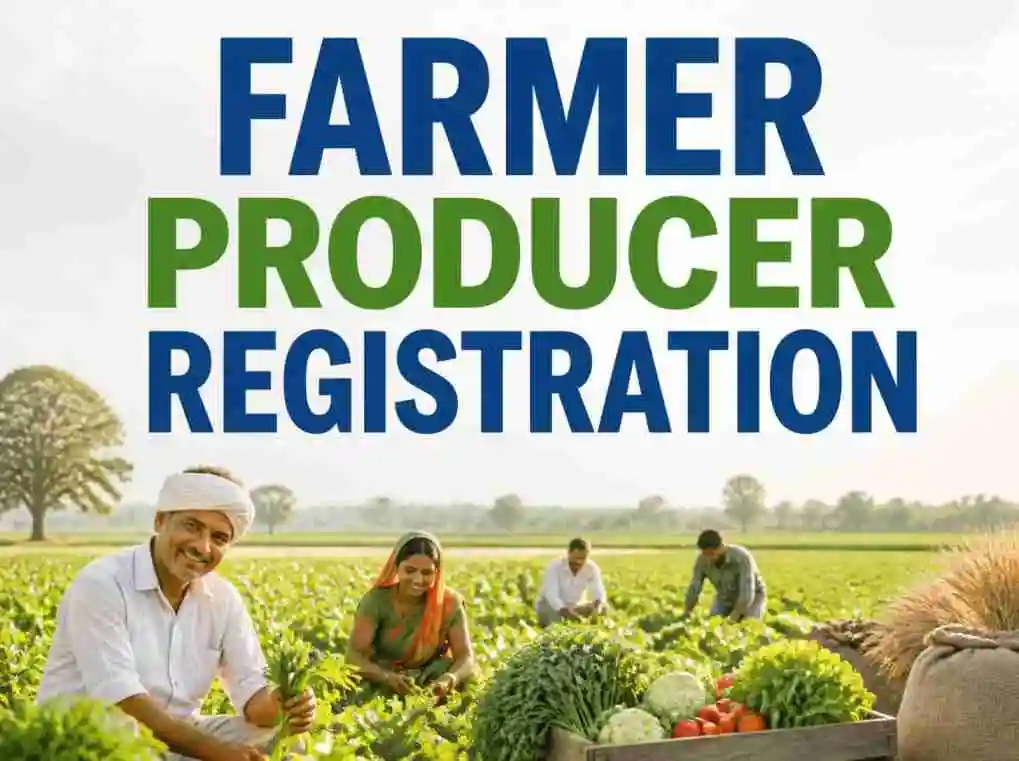
Benefits of Farmer Producer Company Registration in Punjab
Legal Recognition
A Farmer Producer Company operates as a corporate entity under the Companies Act and receives the same legal standing as a private limited company in India. This professional identity helps FPCs build trust with banks, government offices, agricultural organizations, and customers.
Low Tax Benefits
FPCs receive multiple tax advantages that benefit small and marginal farmers. Tax exemptions may apply to agricultural activities such as member produce marketing, primary processing, and distribution of seeds, fertilizers, and machinery.
Higher Bargaining Power
The main advantage of establishing an FPC is the collective strength it gives to farmers. Members can negotiate better prices with wholesalers, supermarket chains, exporters, and food processing industries instead of selling to middlemen at discounted rates.
Better Access to Financial Resources
FPCs get superior access to financial support compared to individual farmers, helping them expand faster and operate more professionally through varied financial wings:
Banks
Easy-term loans, working capital, and warehouse financing.
NABARD
Grant funding, handholding programs, planning assistance, and credit facilities.
Ministry of Agriculture
Subsidies for storage, processing, training, and farm mechanization.
CSR Funds
Support for capacity building, infrastructure, skill training, and marketing.
Venture Capital
Investment support for processing, branding, and supply chain development.
Better Storage & Processing
FPCs establish shared facilities that reduce post-harvest losses, especially for perishable crops. Better storage helps farmers wait for improved market prices:
- Warehouses
- Cold storage units
- Sorting & grading centers
- Small primary processing units
Why Farmer Producer Companies Are Booming in Punjab
Eliminates Middlemen
FPCs allow farmers to sell directly to markets, big buyers, food processing companies, and exporters.
Impact: This can increase farmer income by 15%–40%.
Lower Input Costs
By bulk purchasing essential agricultural inputs, farmers get better wholesale prices.
Better Market Prices
FPCs negotiate with big buyers collectively, resulting in higher selling prices for farmers.
Access to Government Schemes
FPCs help farmers access support from government programs and financial institutions.
Capacity Building
Training programs help farmers improve productivity, market knowledge, and business understanding.
Key Advantage
FPCs help farmers work collectively, sell directly, buy inputs in bulk, negotiate better prices, and access government schemes that improve long-term profitability.
Documents Required for FPC Registration in Punjab
Keep all member documents, office proof, and eligibility requirements ready before applying for Farmer Producer Company registration.
For Each Farmer Member
- PAN Card
- Aadhaar Card
- 2 Passport-size Photos
- Address Proof (Voter ID / Driving License)
- Bank Account Details
For Registered Office
- Electricity Bill or Water Bill
- Rent Agreement (If Rented)
- NOC from Owner
Other Documents
- Proposed Name of FPC
- Activity Details
- Farmer Group Certificate (If Available)
Criteria for Forming an FPC in Punjab
To register a Farmer Producer Company, the following basic eligibility requirements must be fulfilled.
Minimum 10 Farmers
Minimum 5 Directors
Minimum 2 Shareholders/Directors Must Be Farmers
Minimum Authorized Capital: ₹1,00,000
Minimum Paid-up Capital: ₹10,000
Objectives Related to Farm Production
Step-by-Step Farmer Producer Company Registration Process
Follow these steps to register an FPC in Punjab, from obtaining DSC and DIN to incorporation, PAN/TAN issuance, bank account opening, and government scheme applications.
Digital Signature Certificate (DSC)
Each director must have a DSC for signing online forms.
Director Identification Number (DIN)
Apply for DIN through the MCA portal.
Name Approval
Propose 2–4 names. The name must end with Producer Company Limited.
Filing Incorporation Documents
File the SPICe+ form with all required incorporation documents.
Certificate of Incorporation
Once approved, MCA issues the final incorporation documents.
PAN & TAN for the FPC
PAN and TAN are automatically issued after incorporation.
Bank Account Opening
Open a current account in the name of the Farmer Producer Company.
Apply for Government Schemes
After incorporation, Punjab FPCs can apply for relevant support schemes.
Cost of Farmer Producer Company Registration in Punjab
Registration Cost
₹20,000 – ₹35,000
Approximate Total Cost
The approximate total cost of Farmer Producer Company registration in Punjab is ₹20,000 – ₹35,000.
Final cost may vary depending on number of directors, documentation, and professional service scope.
Cost of FPC Registration
Approximate cost range in Punjab
Government Fees
₹4,000 – ₹6,000
DSC Charges
₹1,000 per director
Professional Fees
₹10,000 – ₹25,000
Post-Registration Compliance for FPC in Punjab
After registration, an FPC must maintain annual filings, board meetings, books of accounts, and compulsory audit records.
Annual Filing
AOC-4 (Financial statement)
MGT-7A (Annual return)
Board Meetings
Minimum 4 meetings per year
Books of Accounts
Sales records
Purchase records
Inventory records
Annual Audit
Compulsory audit by a CA
Note: Regular compliance keeps the Farmer Producer Company legally active and helps maintain trust with banks, members, and government departments.
Government Schemes for FPCs in Punjab
Punjab Farmer Producer Companies can benefit from multiple government schemes that provide financial support, equity grants, processing infrastructure, training, and collateral-free funding.
NABARD FPO Scheme
Financial & Technical Support
NABARD provides strong support to Farmer Producer Companies across India through financial and technical assistance. The scheme helps newly established FPCs with training, capacity building workshops, exposure visits, business planning, and market access support.
Key Benefits and Support
Training programs for farmers
Capacity building workshops
Exposure visits
Business planning guidance
Market access support
Modern Food Processing Support for FPCs in Punjab
The PM Kisan Sampada Yojana is a mega scheme designed to modernize India’s food processing sector. FPCs can access funds for building large-scale infrastructure and entering high-value markets.
Cold Storage
Cold chains help farmers preserve fruits, vegetables, and dairy products for longer periods. This reduces product loss and improves market value.
Mega Food Parks
Mega food parks include processing units, packaging centers, logistics hubs, and testing labs at one operational site. FPCs can set up units inside these parks and access ready-made infrastructure.
Agro-Processing Clusters
These clusters support processing and value-addition activities near farming regions. This reduces transport cost and improves final product quality.
High-Value Market Opportunities
Through this scheme, FPCs in Punjab can enter high-value markets and create branded, processed agricultural products with stronger commercial value.
Packaged food
Dairy products
Bakery items
Frozen vegetables
Branded pulses
FAQ on FPCs in Punjab
A Farmer Producer Company is a legal business entity formed by farmers to work together for production, marketing, processing, storage, and value addition. It functions like a private limited company but is created mainly to provide economic benefits to farmers.
To register an FPC, you need 10 or more individual farmers, or 2 or more producer institutions, or a combination of both. All members must be primary farmers, producer groups, or cooperatives.
Key documents include Aadhaar and PAN of all directors, farmer land records if available, passport-size photos, utility bill for registered office address, NOC from property owner, DSC of directors, and professionally prepared MOA & AOA.
The FPC registration process usually takes 15 to 25 days, depending on document availability, name approval speed, and MCA portal processing time.
FPCs require minimum authorized capital of ₹1 lakh. Many FPCs start with capital between ₹1 lakh and ₹5 lakh, and the company can increase its capital as it grows.
No. The registration process is completed online through the MCA portal, so farmers do not need to physically visit government offices.
Punjab FPCs get access to government subsidies, NABARD and SFAC support, bank loans without collateral, tax benefits, collective marketing power, grants for storage and processing units, and buyer linkages with exporters, corporates, and mills.
Yes. Newly registered FPCs may get handholding support from NABARD, SFAC, Punjab Agriculture Department, MARKFED, and Punjab Agro Industries Corporation. These agencies help with training, market linkages, funding, and infrastructure support.
Yes. An FPC can legally enter into contracts with food processing companies, retail chains, exporters, online marketplaces, and government procurement agencies. This helps eliminate middlemen and gives farmers better prices.
Yes. An FPC can set up processing facilities for wheat flour, basmati rice, milk products, vegetables, spices, honey, mustard oil, and other items. Farmers can also build their own brand, package products, and sell directly for higher profits.